
Beethoven Project
Revelatory Concerts
Music Director Nathalie Stutzmann and your orchestra are set to deliver a sonic tour of Beethoven's most memorable works by performing all nine symphonies, his Triple Concerto, the mighty Missa solemnis, and his first piano concerto. Delve into this revolutionary figure's works to hear how he evolved during his lifetime from his first symphony to the monumental 9th (to be performed in Fall 2025).
For any orchestra in the world, a Beethoven cycle is a Himalaya. I think it's incredibly exciting for us, but also for the audience, because it's rare to be able to hear the full symphony cycle plus the Triple Concerto, plus the Missa solemnis.
Nathalie Stutzmann
Presented with the generous support of The Halle Foundation, and in partnership with the Goethe-Zentrum Atlanta.


Performances
There are no upcoming events at this time.
Beethoven Project Featured Products
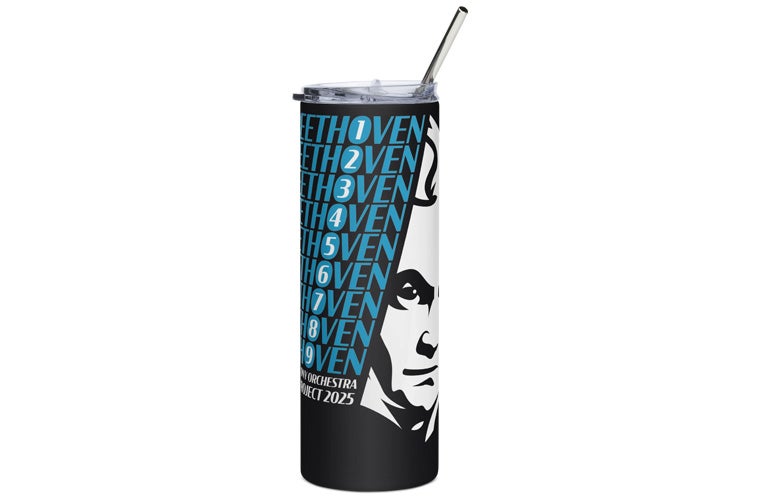
Beethoven Project Stainless Steel Tumbler
Enjoy hot or cold drinks on the go with this stylish stainless-steel tumbler!

Beethoven Project Eco Tote Bag
There’s more than enough room for groceries, books, and anything in between.
Dive Into the Beethoven Project

Early to the Middle "Heroic" Period of Beethoven
December 16, 1770 - Ludwig van Beethoven was born in Bonn. His grandfather Ludwig was the much-loved Kapellmeister at court (master of music). Beethoven's brute father, Johann, was a tenor and a lesser talent, although he was popular at the local pub. He beat music into young Ludwig, starting with piano and adding violin and viola. Grandfather Ludwig died when the boy was only three, but his memory stuck with the composer as a father figure.

Beethoven: Revolution and Upheaval
In 1792, Francis II became Holy Roman Emperor. He convulsed at the very mention of revolution (French Revolutionaries guillotined his aunt Marie Antoinette in 1793). Francis blanketed Vienna with censors, spies, and secret police. He prohibited talk of liberal ideals. Amid the crackdown, 22-year-old Beethoven left Bonn, crossed through Napoleon's army, and settled in the Austrian police state.
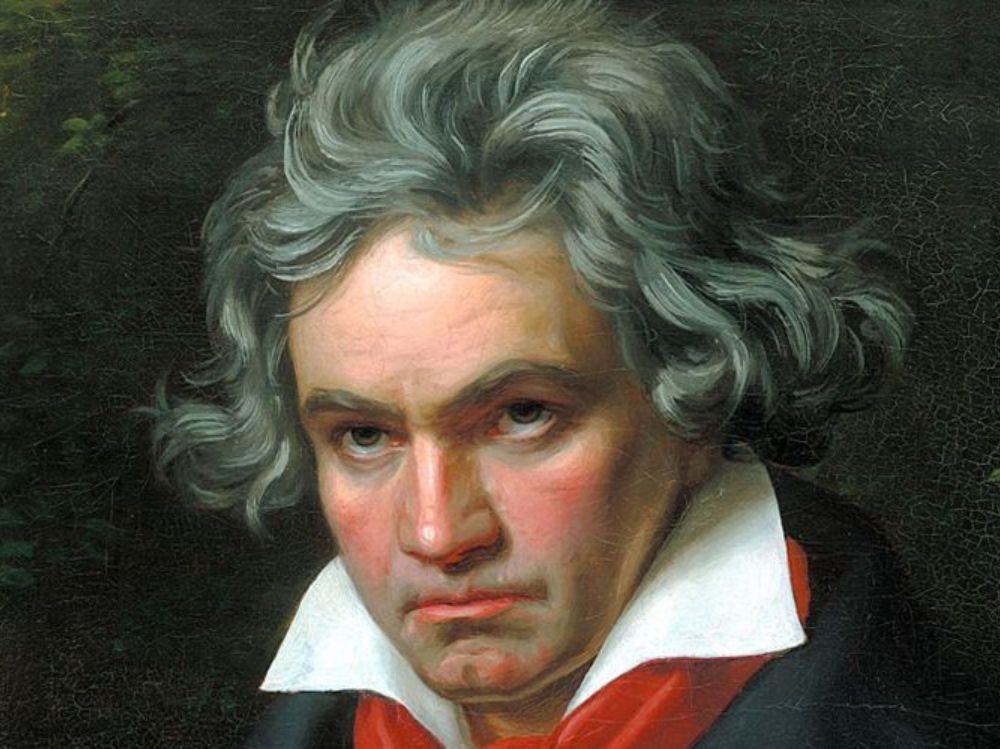
Beyond the deep scowls and wild hair, who was this 19th-century giant?
Ludwig van Beethoven had a hearty laugh and smiled a lot (he had good teeth). He loved to play practical jokes, and his music abounds with humor—musical humor, which sounds good, even when he’s throwing you a wink and a nudge.

Beethoven and Disability
Ludwig van Beethoven was 26 when he first noticed ringing in his ear. In the coming years, the problem grew worse. Eventually, he lost his ability to perceive higher frequencies and, by the 1824 premiere of the Ninth Symphony, stood unaware of the thundering ovation erupting behind him. Nevertheless, as late as 1825 (two years before his death), an eye-witness commented, “He can hear a little if you halloo quite close to his left ear.”
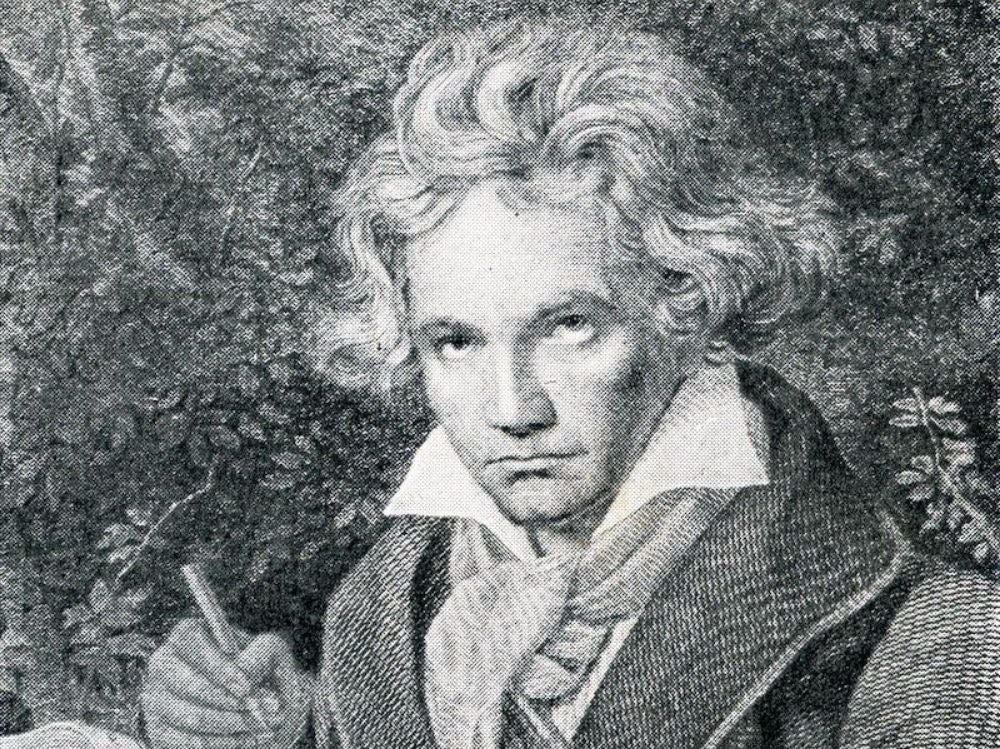
Late Beethoven
Beethoven’s last decade is as much a psychological journey as a musical one. For sure, the audacity and experimentation that defined his “heroic decade” fed into his later works. But he suffered a dry spell and emerged a more introspective and philosophical composer.